Tonight's Cosmic Forecast: Partly Cloudy With a Chance of Quasars
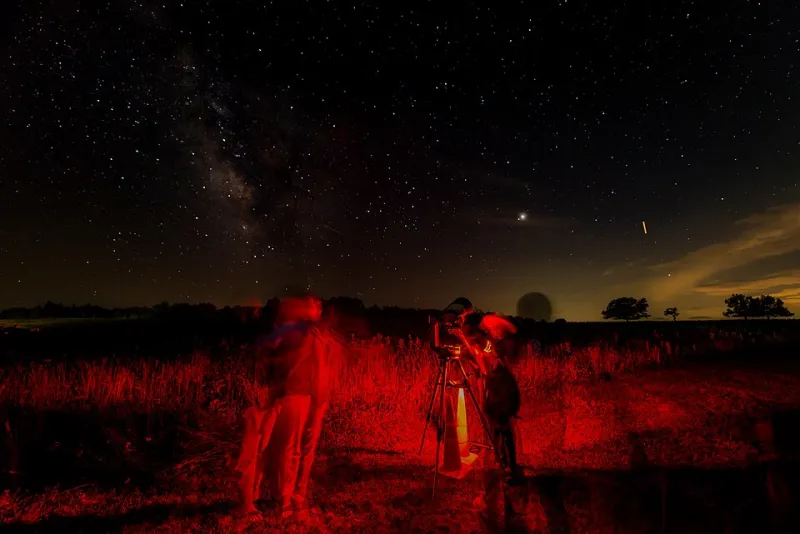
Photo: ShenandoahNPS, Public domain, via Wikimedia Commons
The Sky Has a Forecast Too
You check the weather before you leave the house. Why not check the cosmic weather before you step onto the porch?
Think of the night sky as a busy neighborhood. Some residents are loud and flashy — planets parked in the evening twilight, meteor showers drumming on the atmosphere like a summer storm. Others are quiet to the point of invisibility, like the supermassive black holes quietly digesting gas billions of light-years behind the stars you can actually see.
This is the idea behind our seasonal cosmic forecast: what's bright, what's moving, and what's hiding in plain sight. No telescope required for the highlights — but it helps.
Tonight's Front: Planetary Traffic in the Twilight
Planets are the easy wins of backyard astronomy. They're bright, they don't require dark skies, and unlike the quasars we usually gush about here, they're practically next door.
Depending on the season, you'll usually find at least one planet holding court after sunset. Venus, when it's on the case, outshines everything in the night sky except the Moon — so bright that people call airports to report it. Jupiter is the steady workhorse, a cream-colored beacon that even cheap binoculars turn into a tiny solar system, with its four biggest moons strung out like beads on a wire.
Pro move: planets don't twinkle. Stars flicker because they're point sources; planets are close enough to show tiny disks. If that bright object over the neighbor's roof is holding steady, congratulations — it's a planet.
Scattered Showers: Meteor Seasons Worth Setting an Alarm For
Every year, Earth plows through the debris trails of ancient comets, and the results are the most reliable shows in amateur astronomy. Think of them as scheduled weather events — you can plan a camping trip around them.
The big three for US observers:
- The Perseids (mid-August): Warm nights, up to 50-60 meteors per hour at peak. The classic.
- The Geminids (mid-December): Honestly the best shower of the year, if you can handle the cold. Slow, bright, often colorful.
- The Quadrantids (early January): A short, sharp peak — miss the six-hour maximum and you miss the show.
No gear needed. Just a reclining lawn chair, a thermos, and patience. Your eyes need about 20 minutes to fully adapt to the dark, and every phone screen you glance at resets the clock.
The Deep-Sky Highs and Lows
Once your eyes adjust from a dark driveway or a campsite far from city glow, the faint stuff starts to surface. This is where the sky gets interesting.
The Andromeda Galaxy, visible from fall through winter, is the furthest thing most people will ever see unaided — 2.5 million light-years away, a faint smudge that's an entire galaxy. The Orion Nebula is a stellar nursery you can spot with binoculars on winter evenings. Summer brings the Milky Way's glowing core arching overhead if you're lucky enough to be somewhere truly dark.
Now for the Fun Part: What's Behind the Stars
Here's where Quasarborn readers get an edge on the average stargazer. Some of those innocent-looking points of light are wearing disguises.
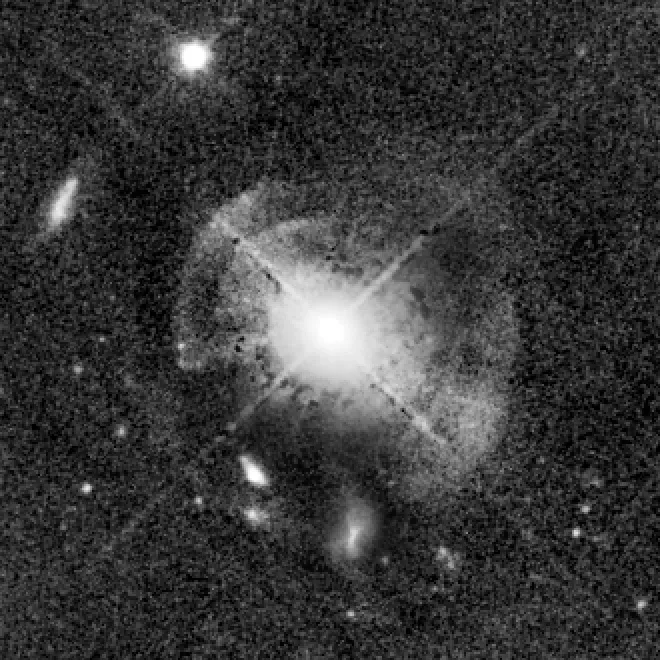
Take 3C 273 in Virgo, visible on spring evenings. To your eye it's an unremarkable star-like point. In reality, it's the brightest quasar in our sky — a black hole's feeding frenzy so luminous that its light left home 2.4 billion years ago, back before anything interesting had crawled onto Earth's land. When you spot it, you're not stargazing. You're reading really, really old mail.
Virgo itself is a cosmic weather system all its own: you're looking through the heart of the Virgo Cluster, thousands of galaxies deep. Most are far too faint for backyard gear, but knowing what you're staring through changes the experience. It's the difference between looking at fog and knowing it's a hurricane.
Your Observing Checklist
Before you head out:
- Check the actual weather. Clouds remain the ultimate party pooper, no matter what's shining behind them.
- Mind the Moon. A bright Moon washes out meteors and deep-sky objects. Plan faint-object nights around the new Moon.
- Dress warmer than you think. Standing still at night gets cold fast, even in summer.
- Use a star app with red-light mode. Regular white light ruins your night vision for a solid 20 minutes.
The Long-Range Outlook
The forecast, as always, is for the universe to keep doing its thing: planets drifting along their predictable lanes, comets shedding dust that becomes future meteor showers, and quasars blazing away whether or not anyone's watching.
That last part is the quiet miracle. The sky's most violent events — matter spiraling into black holes at the centers of distant galaxies — are running constantly, all the time, in every direction. You don't need to catch them to appreciate them. You just need to know they're there behind the stars, and step outside.
Clear skies, and keep looking up.