Every Quasar Photo Is a Ghost Story: How to Read Light That's Older Than Dinosaurs
Photo: NASA/JPL-Caltech/Univ. of Ariz., Public domain, via Wikimedia Commons
Here's a fun party fact the next time someone asks what you do on clear weekends: the quasar light hitting your retina right now is older than the Rocky Mountains. Older than the dinosaurs. In some cases, older than Earth itself.
That's not poetry — it's just how light works. And once it clicks, you'll never look at a telescope the same way again.
The Universe's Worst Livestream
Think about a video call with a friend in Australia. There's a half-second lag. You say something, they hear it a beat later, and their reply comes back delayed too. Annoying, but manageable.
Now imagine your friend moves to a quasar called 3C 273, about 2.4 billion light-years away. The lag isn't half a second anymore. It's 2.4 billion years. If your friend waved at you the day Earth formed, you'd just now be seeing the wave.
Light is fast — about 186,000 miles per second, fast enough to circle the globe seven times in one second — but it's not infinitely fast. And the universe is absurdly big. So light from anything far away takes a long, long time to reach us. Every photon that lands on your eyeball, your camera sensor, or the mirror of the Keck Observatory is a courier delivering a package that was sealed eons ago.
Astronomers call this lookback time, and it's the closest thing we have to an actual time machine.
Okay, So What Does '10 Billion Light-Years Away' Actually Mean?
Here's where people get tripped up, and rightfully so.
A light-year is a distance — how far light travels in one year, roughly 5.9 trillion miles. So when someone says a quasar is 10 billion light-years away, your gut says: "the light took 10 billion years to get here, so I'm seeing it as it was 10 billion years ago."
Good instinct! But the universe likes to add a wrinkle: it's expanding. While that light was cruising toward us, the space it was traveling through stretched like taffy. That stretching means the quasar's current distance is actually greater than 10 billion light-years, and the math of converting distance to lookback time gets genuinely weird.
For a casual stargazer, here's the only takeaway you need: for anything outside our cosmic neighborhood, the distance and the age of the image are basically two sides of the same coin. Farther away equals further back in time. A quasar at 12 billion light-years is showing you a snapshot from when the universe was a toddler — barely a billion or two years old.
Your Backyard Is a Museum of the Past
Once you internalize this, the night sky turns into a stratified archaeological dig. You don't even need a telescope to start:
- The Sun shows you what it looked like 8 minutes ago. If it flared right now, you'd have a comfortable 8-minute head start before finding out.
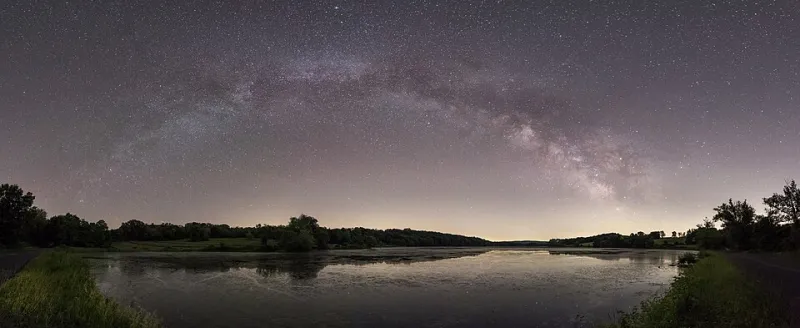
- The Andromeda Galaxy, visible as a faint smudge from dark-sky spots in places like rural Pennsylvania or the high desert of New Mexico, appears as it was 2.5 million years ago — back when early hominins were just figuring out stone tools.
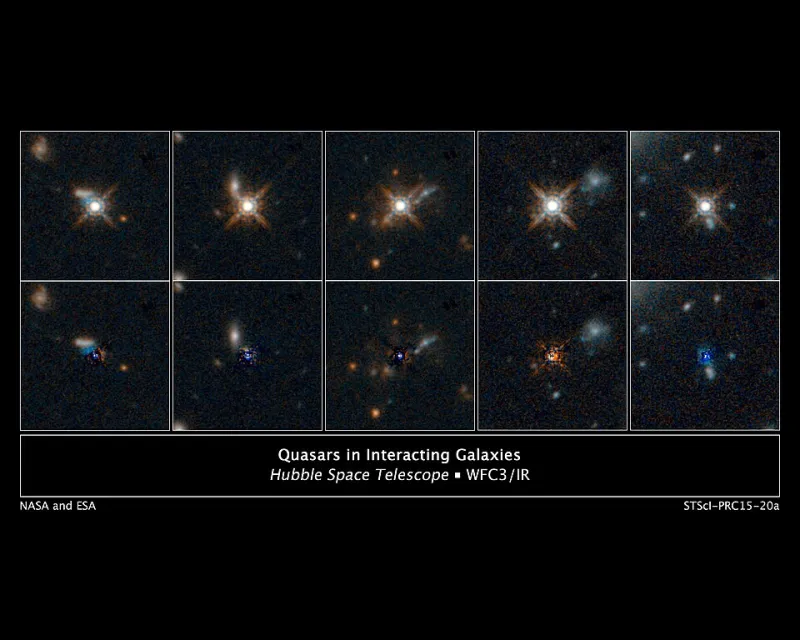
- Quasars are the deep layers of the dig. The brightest ones are so absurdly luminous — often outshining a trillion stars combined — that we can spot them from when the universe was in its childhood.
That's the whole reason quasars matter so much to astronomers. They're bright enough to be seen across nearly the entire universe, which means they're bright enough to be seen across nearly the entire past. Point a big telescope at them and you're literally reading the universe's baby book.
How to Start Reading Old Light Tonight
You don't need a research-grade setup to experience lookback time firsthand. Here's a beginner's progression:
Step 1: Feel the delay with the Sun. Trivial but real — you're always seeing the Sun 8 minutes in the past. Sunset you're watching already happened.
Step 2: Catch a galaxy. Under dark skies, find Andromeda with binoculars. Say out loud: "This light left before humans existed." It sounds corny. It works anyway.
Step 3: Meet a quasar. From a dark location with a decent telescope, targets like 3C 273 in Virgo are reachable. It'll look like an unremarkable star — that's part of the charm. That dim point of light outshines our entire galaxy, and the image in your eyepiece is 2.4 billion years old. Land on Earth had barely been colonized by plants when that light started its trip.
Step 4: Go deeper (from your couch). Sites like NASA's image archives and survey data from the Sloan Digital Sky Survey publish quasar catalogs spanning billions of years of cosmic history. You can browse snapshots of the early universe from your living room in your pajamas. The cosmos doesn't judge.
Why This Should Give You Chills (the Good Kind)
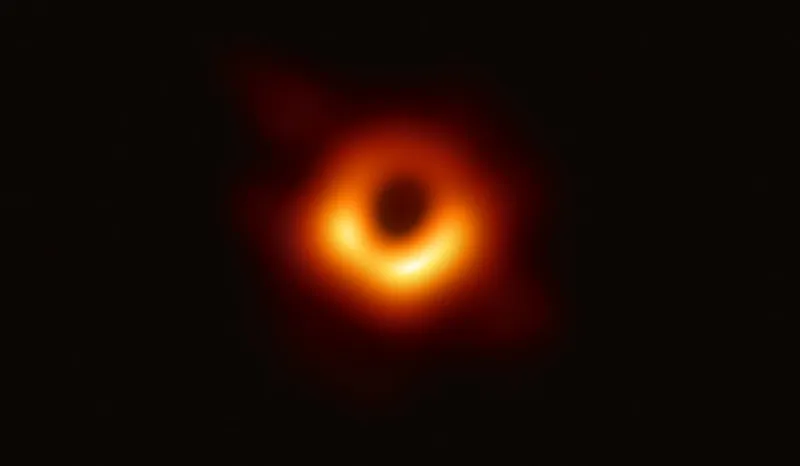
There's a quiet philosophical punch hidden in all this. Every quasar photo ever taken — every Hubble deep field, every JWST image that made the news — is a photograph of something that may no longer exist in that form. The black hole engines powering those beacons have been feeding, or starving, for billions of years since the light left.
We can't ever see the universe as it is, only as it was. But that turns out to be a gift. Because light travels at a finite speed, the sky above you is a layered archive — recent history nearby, deep history far away — and anyone with a pair of binoculars and a clear night gets access.
The universe didn't have to work this way. In a hypothetical world with infinite light speed, everything would be visible in real time and the past would be gone forever. Instead, the cosmos kept the receipts. Every photon ever emitted is still out there, still traveling, still delivering.
So the next clear night, step outside, look up, and remember: you're not stargazing. You're time traveling. Slowly, passively, and completely free of charge.