Press Play on a Black Hole: The Scientists Turning Quasars Into Songs You Can Hear
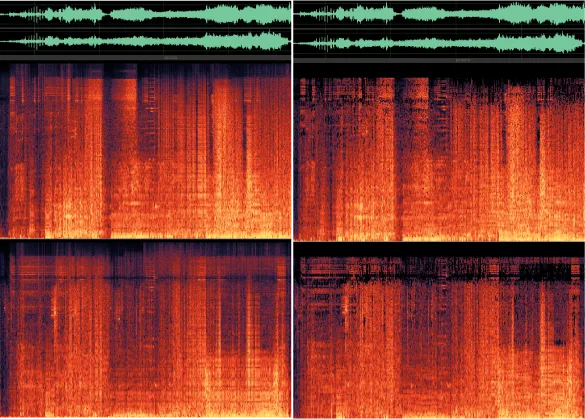
Photo: ItzaGarciaOrdonez, CC BY-SA 4.0, via Wikimedia Commons
Close your eyes and imagine a quasar.
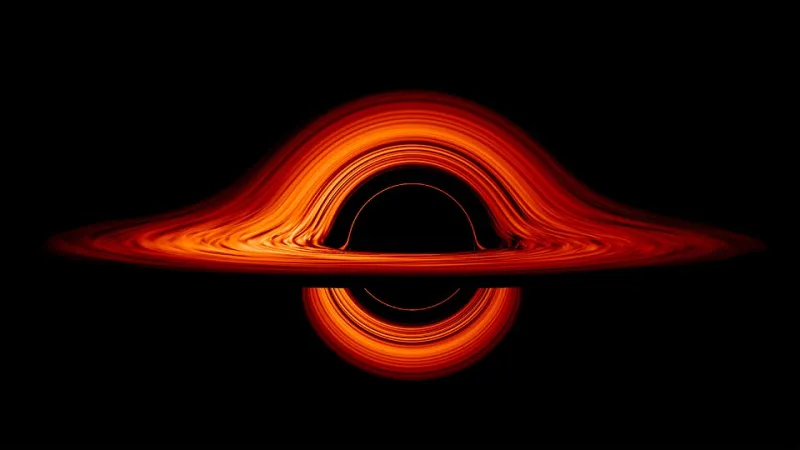
Chances are, you pictured it: a blinding point of light, a swirling disk, maybe an artist's rendering borrowed from a documentary. Sight dominates how we talk about the universe. "Look up." "Watch the skies." "Seeing is believing."
But a growing group of researchers, working with NASA and a handful of observatories, is asking a different question: what if you could hear a quasar instead?
The Black Hole That's Been Singing the Whole Time
Start with the most famous example. In 2003, astronomers using NASA's Chandra X-ray Observatory detected ripples in the hot gas surrounding the Perseus Cluster — a massive gathering of galaxies some 240 million light-years away. Those ripples were pressure waves, literally sound waves, pushed out by the supermassive black hole at the cluster's heart every time it belched out a jet.
Here's the catch: the actual note was absurdly deep. The waves ripple outward once roughly every 9.6 million years, which works out to a frequency about 57 octaves below middle C — tens of octaves below anything a human ear could register. Researchers identified it as a B-flat, and it holds the record as the deepest note ever detected in the universe.
In 2022, NASA released a sonification that shifted those Perseus data into audible range, letting the public hear the black hole's hum for the first time. The result is eerie — a low, groaning drone that sounds less like music and more like the universe clearing its throat. Millions of people streamed it. Some found it unsettling. Others found it strangely calming. Almost nobody forgot it.
How Do You Turn Light Into Sound?
The Perseus note was a genuine sound wave that just needed a pitch adjustment. But most sonification works differently — it's a translation, not an amplification.
The process, called data sonification, maps properties of data onto properties of sound. Take a quasar's light curve: a chart showing how brightly it flares and dims over months or years. In a sonified version, time might become the horizontal axis of a audio track, brightness becomes pitch (brighter means higher), and different wavelengths of light — X-ray, ultraviolet, optical — get assigned to different instruments or tones.
The result: a flare that spikes in the data becomes a rising note you can hear coming. A sudden dip becomes an audible drop. Patterns that would take a trained eye weeks to spot in a spreadsheet can jump out of a speaker in seconds.
And this isn't just a gimmick. Sonified data has genuinely helped researchers. Astronomers working with sonified supernova and pulsar data have reported catching features by ear that they'd overlooked visually. There's a reason doctors still use stethoscopes — sometimes the ear catches what the eye misses.
Accessibility Isn't a Side Note — It's the Point
For blind and low-vision communities, sonification isn't a novelty. It's a door.
Roughly 12 million Americans over 40 have some form of vision impairment, and traditional astronomy outreach — gorgeous images, star charts, telescope eyepieces — can be almost entirely closed to them. Sonification flips that. A student who has never seen a star can still hear a pulsar's relentless tick, or the swelling drone of a feeding black hole, and understand what's happening.
Organizations and researchers in the US have been pushing this forward for years. The American Printing House for the Blind and NASA's Universe of Learning have collaborated on accessible astronomy materials. Astronomers like Kimberly Arcand of the Chandra team and Wanda Díaz-Merced — a blind astrophysicist who pioneered sonification techniques after losing her sight — have argued that listening to data isn't charity. It's a legitimate scientific tool that expands who gets to participate.
Díaz-Merced has put it simply: when you sonify data, you're not dumbing it down. You're opening a second channel into the same universe.
Hearing the Brightest Things in the Sky
For a site named after the loudest lights in the cosmos, there's something fitting about this. Quasars are the most luminous steady objects in the universe — visible, in principle, from the edge of the observable universe. But their light curves twist and flicker on timescales that make visual analysis genuinely hard.
Sonified, a quasar's variability becomes a kind of composition. A stable, slowly brightening source plays a smooth glissando. A violently variable one produces something closer to free jazz. Researchers are now experimenting with turning multi-wavelength quasar surveys into audio so that variability patterns — the fingerprints of what's happening near the event horizon — can be compared by ear.
There's even a philosophical payoff. Sound is time-based. You can't pause a note and examine it the way you freeze a frame. Listening to a black hole forces you to experience it as a process — something that unfolds — which, honestly, is closer to the truth than any static photograph.
Put On Some Headphones
If you haven't listened yet, it takes about two minutes. Search for NASA's Perseus Cluster sonification, or the sonified data from the black hole at the center of M87 — the first black hole humanity ever photographed. Play them back to back.
One hums. One crackles. Neither sounds like anything you'd expect from an object that famously traps even light itself.
And that's the quiet revolution here: the universe doesn't care which sense you use to meet it. For centuries, astronomy has been a science of looking. It's increasingly becoming a science of listening, too — and the cosmos, it turns out, has plenty to say.