Reading the Universe's Baby Book: How We Know What Happened in the First 100 Million Years
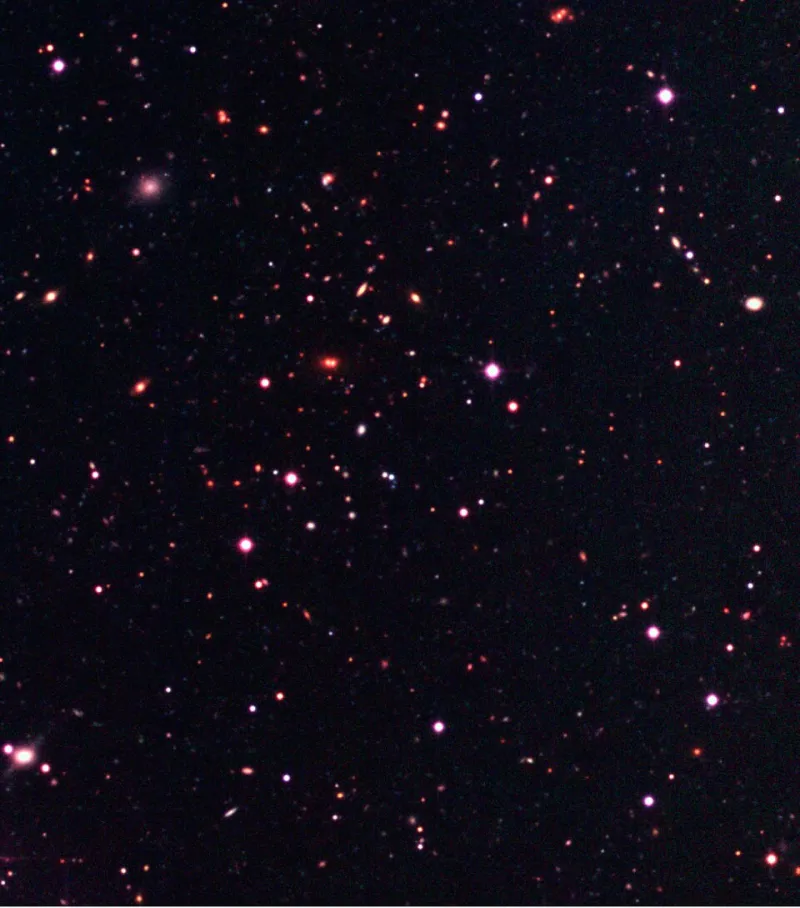
Photo: ESO, CC BY 4.0, via Wikimedia Commons
Imagine you're an archaeologist handed a diary that someone tried to burn. The pages are scorched, the ink has run, and whole chapters are missing. Your job? Reconstruct what that person's childhood was like anyway.
That's essentially the task facing cosmologists who study the first 100 million years of the universe. For context: the universe is about 13.8 billion years old, so we're talking about the first one percent of its life. If the universe were a 50-year-old person, this would be the first six months—before the baby book got filled in.
And yet, against all odds, we've managed to read some of it. Here's how.
The Oldest Photograph Ever Taken
Start with the cosmic microwave background, or CMB. About 380,000 years after the Big Bang, the universe finally cooled enough for atoms to form, and light that had been trapped in a cosmic fog suddenly streamed free. That light is still traveling—and it's still hitting Earth, stretched by billions of years of expansion into faint microwaves.
Think of it as the universe's first baby photo, taken before it could walk. Missions like NASA's WMAP and the European Space Agency's Planck satellite mapped this glow in exquisite detail, and the tiny temperature ripples they found—differences of less than one part in 100,000—tell us where the universe's future galaxies would eventually grow. It's like reading the faint pencil sketch beneath a finished painting.
But the CMB only gets us to year 380,000. What happened next—the era when the first stars ignited and the first galaxies assembled—remained a mystery until very recently.
Enter the Quasar Time Machine
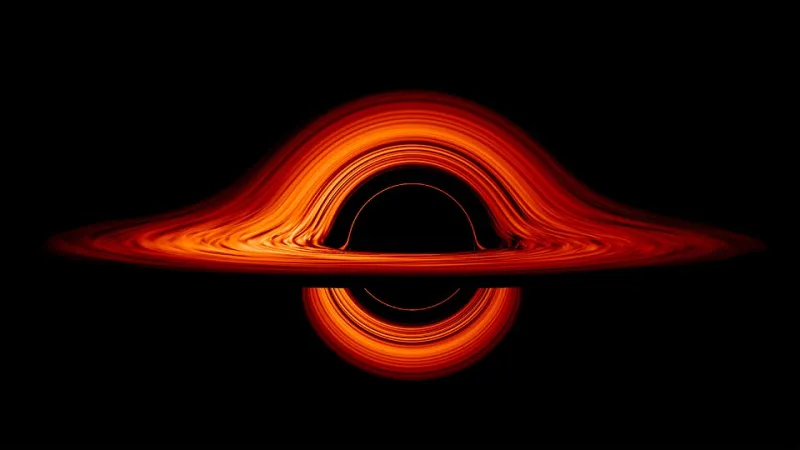
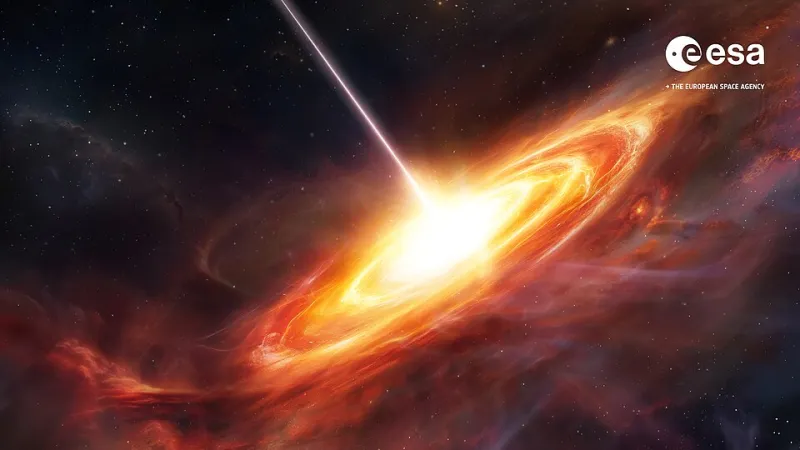
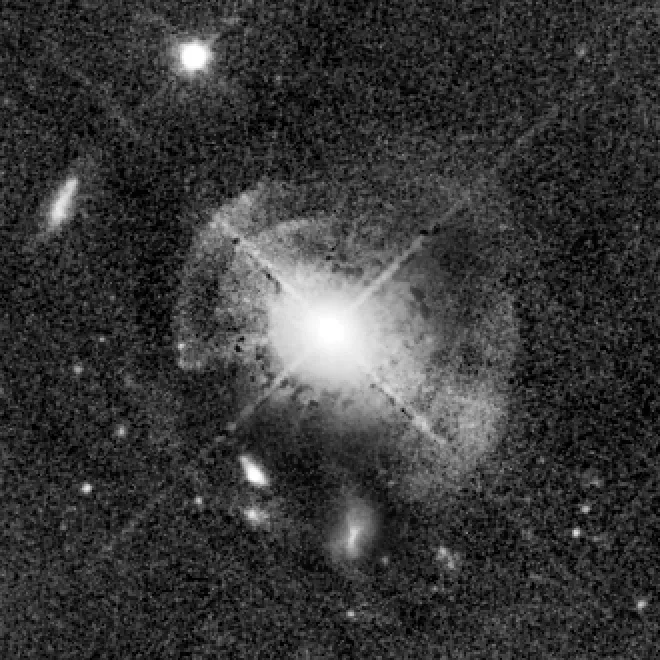
Here at Quasarborn, we're obviously partial to this part of the story. Quasars—the blindingly bright hearts of galaxies powered by feeding supermassive black holes—are so luminous they can be seen from across nearly the entire observable universe.
And that's the trick. Because light travels at a fixed speed, looking at a quasar 13 billion light-years away means looking at light that left it 13 billion years ago. Every quasar is a time capsule. Its light carries the chemical fingerprint of the gas it passed through on the way to our telescopes, and by splitting that light into a spectrum, astronomers can read what the universe was like in between—like checking the dust and scratches on an old film reel to learn about the projector.
One of the biggest revelations: quasar spectra showed that the early universe was filled with neutral hydrogen fog, and something burned that fog away. That process, called reionization, was powered by the first generation of stars and galaxies—and understanding when and how it happened is one of the great detective stories in modern astronomy.
JWST Opens the Family Album
The James Webb Space Telescope has been the game-changer. Its infrared eyes are specifically built to catch light that has been stretched by cosmic expansion from visible wavelengths into the infrared—exactly what happens to light from the earliest galaxies.
In just a few years of operation, JWST has spotted galaxy candidates that appear to exist just a few hundred million years after the Big Bang, some apparently hosting surprisingly massive black holes. Those finds have rattled theorists, who now have to explain how the universe built such big structures so fast. (We've covered some of those head-scratchers in a previous piece.)
There's also the cosmic dawn itself—the very first stars. JWST hasn't definitively imaged one yet, but indirect evidence, including hints from the CMB and observations of distant gas clouds, suggests they were monsters: hundreds of times the mass of our Sun, blazing blue and hot, with no planets and no neighbors.
Why the Timescales Aren't as Crazy as They Sound
Here's the part that makes this personal. A hundred million years sounds unfathomable, but consider: dinosaurs roamed Earth for about 165 million years. The gap between the first stars and the first big galaxies is roughly the gap between T. rex and you ordering a coffee. The universe's early chapters unfolded on timescales that, cosmically speaking, were downright brisk.
That's what makes this science so gripping. The universe went from a featureless fog to a sparkling landscape of galaxies in less time than it took mammals to diversify on Earth. We live in the quiet aftermath of a stunningly productive construction boom.
The Diary Still Has Blank Pages
Plenty remains unread. We don't know exactly when the first stars switched on. We're not sure how supermassive black holes got so big so early. And a tantalizing signal from the early universe reported by a radio experiment in 2018—the famous EDGES result—hasn't been confirmed, leaving a genuine whodunit on the books.
But every new JWST image, every newly discovered high-redshift quasar, every future mission like the proposed next-generation observatories adds another fragment to the diary. The archaeologists are on the case, and the baby book is slowly filling in.
The universe may not remember its childhood. Fortunately, we've learned to read its light like a diary anyway.