Set Your Watch to a Black Hole: How Quasars Became the Universe's Master Clocks
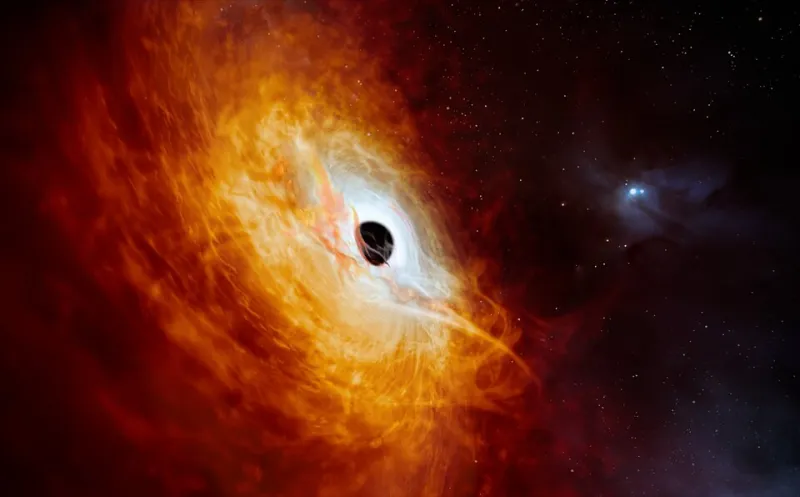
Photo: ESO/M. Kornmesser, CC BY 4.0, via Wikimedia Commons
Here's a fun thought experiment: imagine trying to measure the distance from New York to Los Angeles using a lighthouse in the middle of the Pacific Ocean. Sounds impossible, right? Yet astronomers do something remarkably similar every single day — except their lighthouse is a quasar billions of light-years away, and the measurements they're taking are rewriting what we know about the size and age of the universe.
A Flicker Worth Billions of Dollars (and Light-Years)
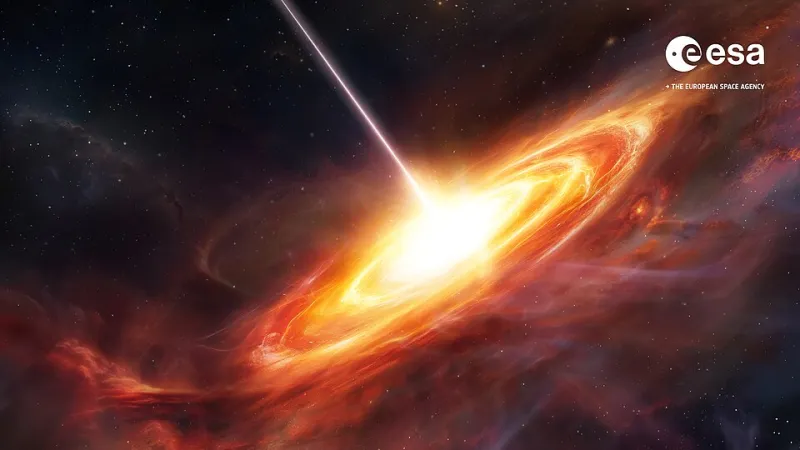
First, a quick refresher. A quasar is the blazing core of a distant galaxy, powered by a supermassive black hole that's actively feeding. As matter spirals inward, it heats up and releases more energy than billions of stars combined. From our vantage point on Earth, quasars look like faint, star-like points of light — but they're some of the most luminous objects we've ever detected.
Here's the thing that makes them special: quasars don't shine steadily. They pulse and vary in brightness, sometimes over hours, sometimes over years. Think of a quasar like a campfire — the flames dance and shift constantly, even though the fire itself burns on. That variability isn't a flaw. It's a feature, and it's become the backbone of an entire field of cosmic measurement.
The Lighthouse Trick: Measuring Distance with a Pulsing Beacon
So how does a flickering light tell you how far away something is? The secret is a technique that echoes something you've probably done in your own kitchen.
Picture a microwave oven. You know the hum takes a moment to reach your ears, and the light inside turns on instantly. If you could somehow compare the timing of the two, you could figure out how far apart they are. Astronomers do essentially the same thing with quasars, a method called reverberation mapping.
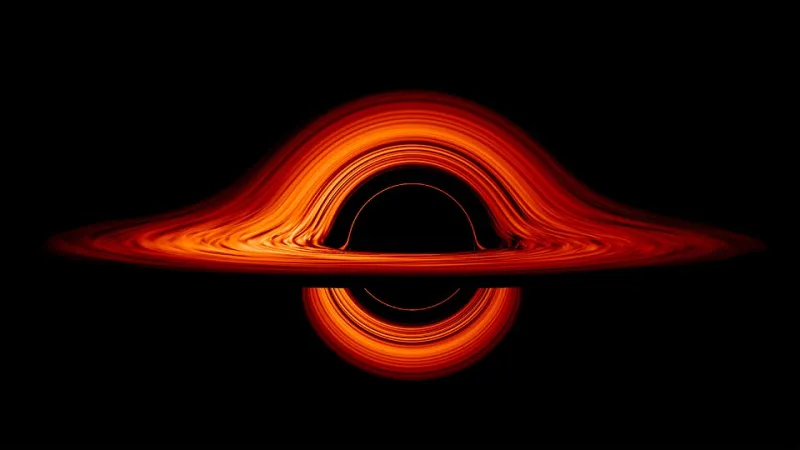
When a quasar brightens, that flash of light doesn't hit everything at once. It first illuminates the gas clouds swirling nearby, and then — a few days or weeks later — those clouds respond by glowing in their own right. By measuring the delay between the quasar's flash and the gas cloud's echo, scientists can calculate the physical size of the region around the black hole. That size, combined with how wide the region appears in the sky, gives us the distance.
It's like dropping a stone into a pond and timing how long it takes the ripples to reach the shore. The bigger the pond, the longer the wait.
Why Not Just Use Supernovae?
If you've followed space news, you might know that Type Ia supernovae are the traditional "standard candles" for measuring cosmic distances. They're reliable, but they have one big problem: they're one-and-done events. A supernova explodes, fades, and it's gone. You can't go back and double-check your measurements years later.
Quasars don't have that problem. They can shine for millions of years, giving astronomers endless opportunities to refine their measurements. It's the difference between a single-use camera and a security camera that never turns off. In recent years, researchers have developed techniques to use quasar brightness patterns as standardized distance markers across billions of light-years — potentially extending our cosmic measurements far beyond what supernovae can reach.
A Time Machine That Tests Time Itself
Here's where things get genuinely mind-bending. Quasars are so far away that the light reaching us tonight left home when the universe was young — sometimes when it was less than a billion years old. That means quasars aren't just distant objects. They're snapshots of the past.
But there's a bonus. Because quasar light travels across billions of light-years, it also acts as a test of how time itself behaves across cosmic history. Some theories suggest that fundamental constants — like the fine structure constant that governs how atoms absorb light — might drift over billions of years. When we analyze the light from quasars, we're reading a message written when the universe was young. If those atomic fingerprints look different than they do today, it could mean the very rules of physics have changed. So far, the evidence is contested, but quasars remain our best tool for running this experiment.
The Future: Quasars as the Gold Standard
With new surveys like the Legacy Survey of Space and Time (LSST) at the Vera C. Rubin Observatory in Chile — which began operations this decade — astronomers are set to monitor millions of quasars night after night, year after year. That's an unprecedented dataset of cosmic heartbeats.
The goal? To turn quasar variability into a precision tool for measuring the expansion of the universe, potentially helping settle the ongoing tug-of-war over the Hubble constant — the number that tells us how fast the cosmos is growing. Right now, different measurement methods give slightly different answers, a tension known as the "Hubble tension." Quasars might be the referee that settles the dispute.
Why This Matters to You
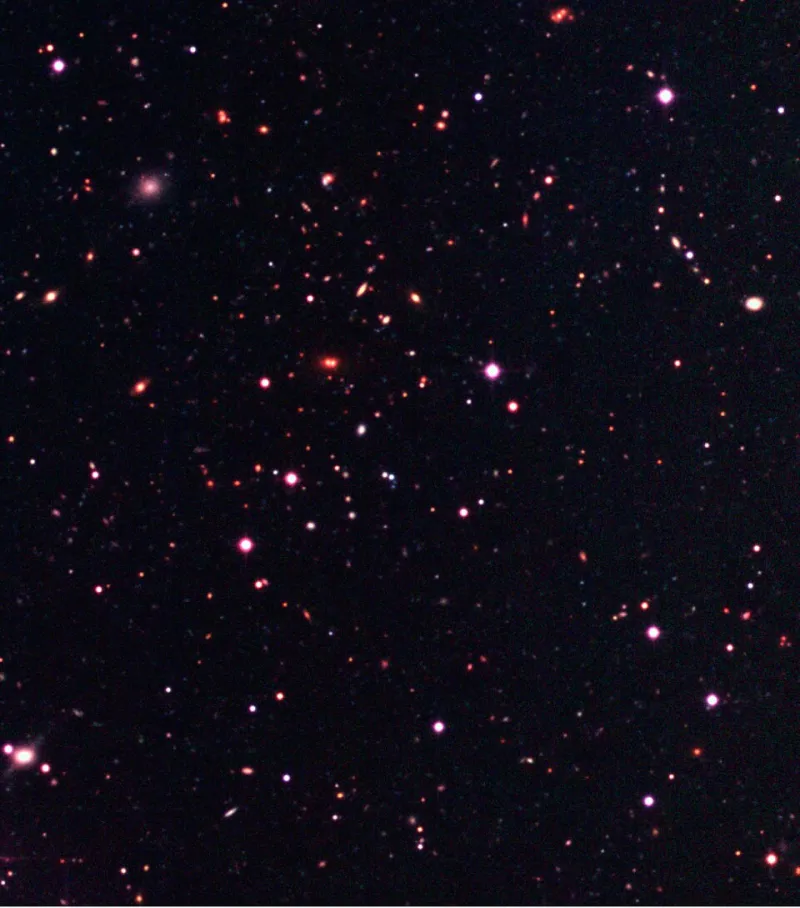
The next time you see a photo of a quasar — a tiny, unremarkable dot in a sea of stars — remember what you're actually looking at. It's a clock, a ruler, and a time machine rolled into one. It's a beacon that's been traveling since before our solar system existed, carrying messages about the size of the universe, the behavior of matter near black holes, and possibly even whether the laws of physics are truly constant.
Not bad for a flickering point of light.