The Cosmic Neighborhood Watch: Why Some Quasars Switch On Together While Others Stay Dark
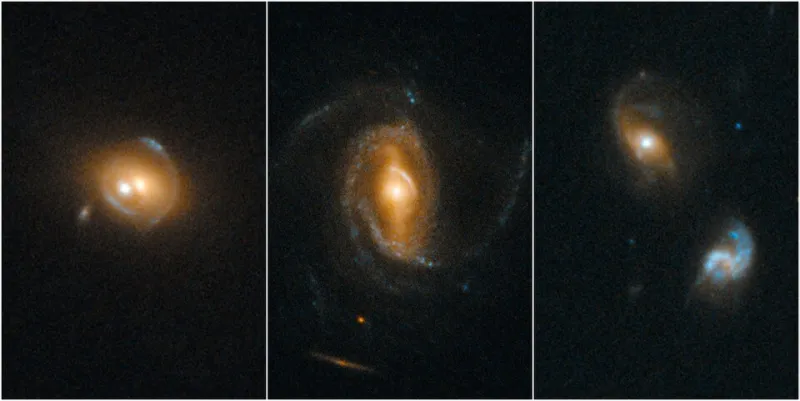
Photo: NASA, ESA/Hubble and F. Courbin (Ecole Polytechnique Federale de Lausanne, Switzerland), CC BY 3.0, via Wikimedia Commons
Picture two galaxies, floating a few hundred thousand light-years apart in the early universe. Both are loaded with gas. Both anchor a supermassive black hole at their core. And then, almost on cue, both black holes light up as quasars — two of the brightest objects in existence, blinking on like neon signs on the same cosmic block.
Meanwhile, a third galaxy sits right next door. Same neighborhood. Same raw ingredients. Its black hole? Fast asleep. Nothing to see here.
What gives? Why do some quasars seem to arrive in pairs — or even whole squads — while their equally massive neighbors never get the memo?
First, a Refresher: What Turns a Quasar On
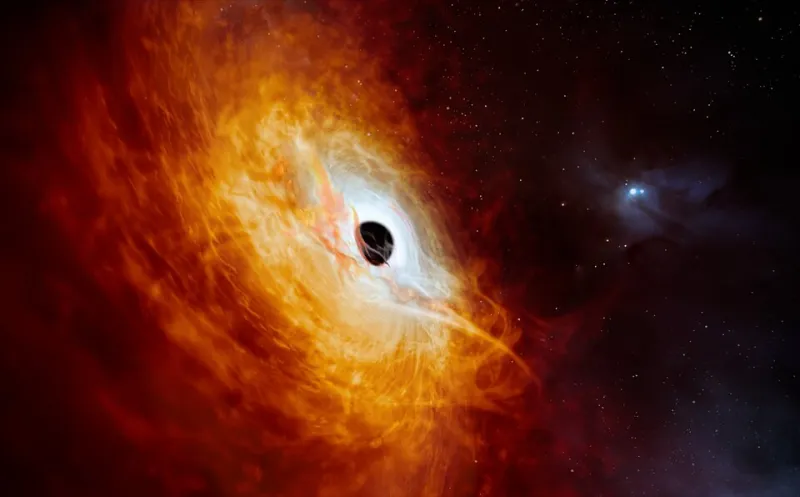
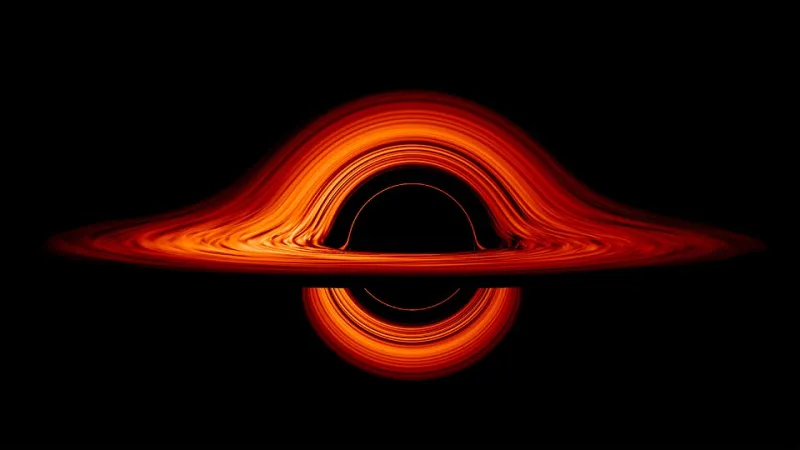
A quasar isn't a black hole glowing. It's the dinner glowing. When gas funnels down toward a supermassive black hole, it piles into a spinning accretion disk, heats up to millions of degrees, and blasts out radiation that can outshine every star in the host galaxy combined.
The catch: black holes are famously messy eaters. They need gas delivered to their doorstep, and most galaxies are surprisingly bad at it. Stars orbit calmly at safe distances. Gas clouds settle into stable rotations. Without a trigger — a shove, a collision, a tidal squeeze — that fuel just keeps circling the drain without ever falling in.
So the real question isn't "why is that black hole bright?" It's "who or what delivered the gas?" And that's where the twinning story starts.
The Gravitational Group Chat
Galaxies don't float in isolation. They cluster, along filaments of dark matter and gas, into the vast scaffolding astronomers call the cosmic web. And when galaxies get close, they start talking — gravitationally.
When two galaxies swing past each other or begin a slow merger, their mutual gravity stirs the pot. Gas that was orbiting peacefully gets torqued, compressed, and funneled inward. Simulations show these close encounters can dump staggering amounts of fuel onto the central black hole in a relatively short window — cosmically speaking, a burst of a few million years is a short window.
Now scale that up. If a small group of galaxies is gravitationally entangled — think of a cosmic cul-de-sac where everyone's orbit crosses everyone else's — the same era of interactions can switch on multiple black holes at roughly the same time. Astronomers have spotted double and even triple quasars at high redshift: multiple feeding monsters separated by distances smaller than our galaxy's width. That's not coincidence. That's choreography.
The galaxies in these groups are essentially sharing a destabilizing gravitational environment. One galaxy's close pass ripples through the whole system, nudging orbits, compressing gas, and hitting the ignition switch on neighbors in sequence. Quasar twinning, in this picture, is a fossil record of gravitational chaos.
So Why Does the Neighbor Sleep?
Here's the flip side, and it's where the physics gets deliciously picky.
Being in a busy neighborhood helps, but it doesn't guarantee anything. Whether a given galaxy's black hole lights up depends on a surprisingly fragile chain of events:
- Gas supply. A galaxy that already spent its cold gas — maybe through an earlier burst of star formation — has nothing to feed its black hole no matter how hard you shake it.
- Timing. Gravitational encounters compress gas on timescales of tens to hundreds of millions of years. Two galaxies can experience the same interaction and have their peak gas inflows separated by long stretches. To us, observing a single snapshot in time, one looks awake and the other looks dead.
- Angular momentum. Gas doesn't fall straight in; it has to shed its orbital spin. Some galaxies are just better at bleeding off that rotation than others. Bad angular momentum logistics means no dinner, no quasar.
- Feedback. Once a quasar ignites, its own radiation and outflows can heat or expel nearby gas — sometimes even in the companion galaxy. A lit quasar can, in effect, keep its neighbor's kitchen closed.
Add all that up and you get the pattern observers actually see: quasars cluster together far more often than random chance would predict, but plenty of massive galaxies in the same regions stay stubbornly dark. The neighborhood matters. The plumbing matters more.
What Twinning Tells Us About the Cosmic Web
Here's why astronomers care about this beyond the cool factor.
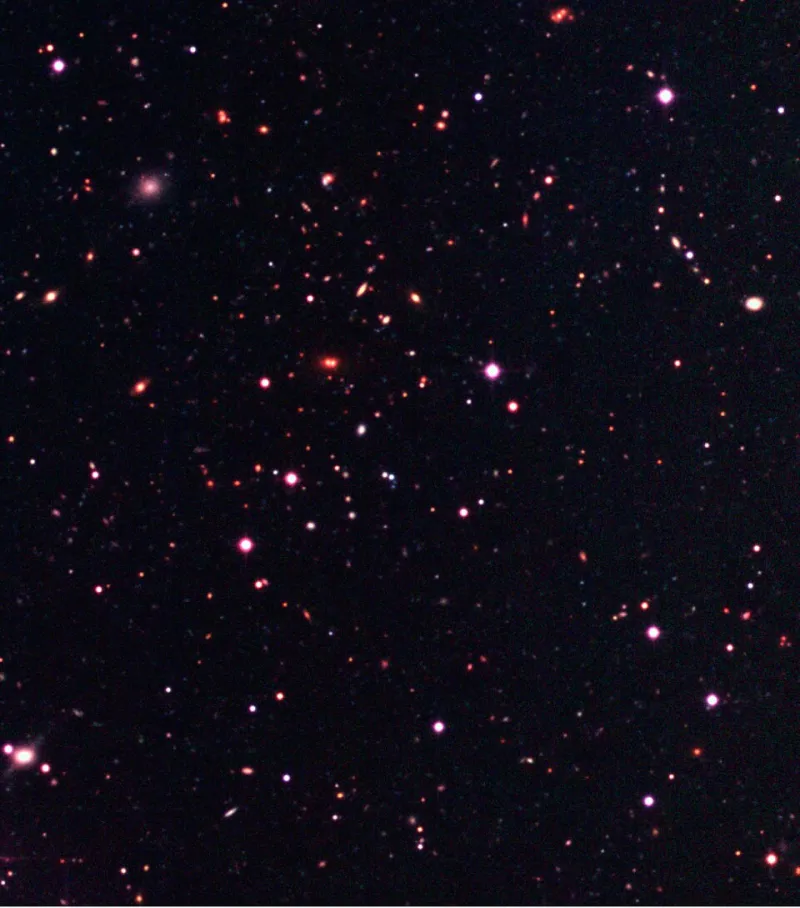
Quasars are like lighthouses planted along the cosmic web's filaments — because that's where the gas is, and that's where galaxies collide. When we find paired or grouped quasars, we're effectively mapping the densest knots of the universe's structure, especially in the early universe where direct observation is brutally hard.
Twinning rates also test our models of how structure grew. If simulations of the early universe produce roughly the right number of close quasar pairs at the right separations and epochs, that's a checkmark for our understanding of hierarchical galaxy assembly — big structures growing by swallowing small ones. Get the numbers wrong, and something in the recipe needs revising. Some recent observations of surprisingly abundant quasar pairs have done exactly that, nudging theorists to rethink how efficiently mergers trigger black hole feeding.
In other words, every double quasar is a data point about how the universe went from smooth and featureless to the lumpy web of galaxy clusters we live in today.
The Long Game: Twins Today, One Monster Tomorrow
There's a sequel, too. When two quasar-hosting galaxies finally merge completely, their black holes spiral together and eventually combine — producing the gravitational-wave chirps that future space-based detectors like LISA will catch by the thousands. Many of the double quasars being discovered now are essentially the opening act of that eventual merger.
So the next time you see a photo of two quasars burning side by side, remember what you're looking at: two galaxies caught mid-shove, their black holes fed by the same gravitational storm, their neighbors' fates written in the same tidal forces. Some lights come on together because the universe pulled the same trigger twice. And some stay dark because, in the end, even in the busiest cosmic neighborhoods, timing is everything.