Living in the Long Twilight: Why the Universe's Brightest Days Are Behind Us (And Why That's Great News)
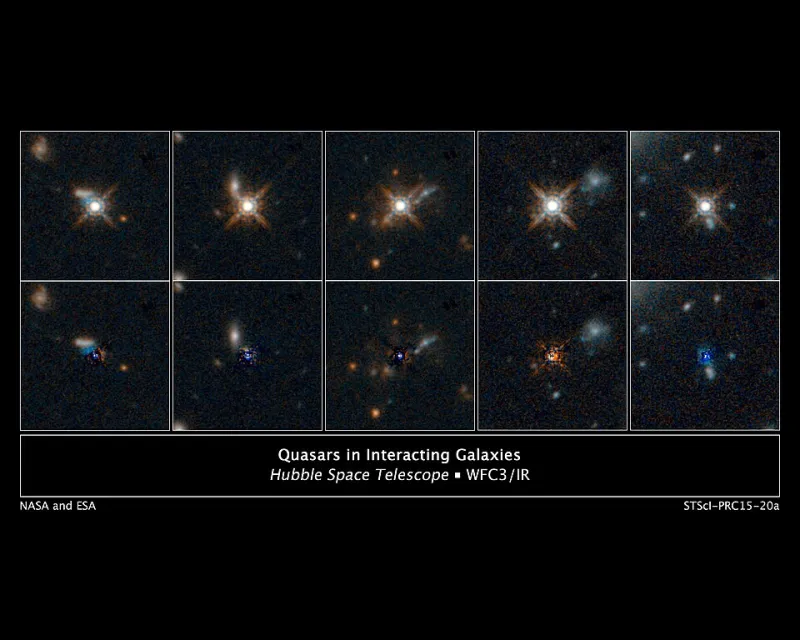
Photo: NASA, ESA, and E. Glikman (Middlebury College, Vermont), CC BY 4.0, via Wikimedia Commons
Picture the universe at its absolute peak. Not today — roughly ten billion years ago, when the cosmos was a rowdy young place and nearly every big galaxy had a monster black hole at its center, feasting loudly enough to outshine every star in the host combined. Astronomers call it 'cosmic noon,' and it was, quite literally, the brightest time there will ever be.
We missed it. But here's the twist: we might be living at the perfect moment to understand it.
What Cosmic Noon Actually Looked Like
Around three billion years after the Big Bang, the universe was going through what you might call its college years — chaotic, energetic, and up all night. Galaxies collided constantly back then. The universe was smaller, denser, and more crowded, so mergers happened at a pace we simply don't see anymore.
And every time two galaxies smashed together, gas got funneled toward the supermassive black hole at the center. That black hole lit up as a quasar, blasting out radiation visible across the observable universe. At cosmic noon, quasar density was hundreds of times higher than it is today. The sky, if you'd been around to see it, would have been a firework show in every direction.
The Slow Fade
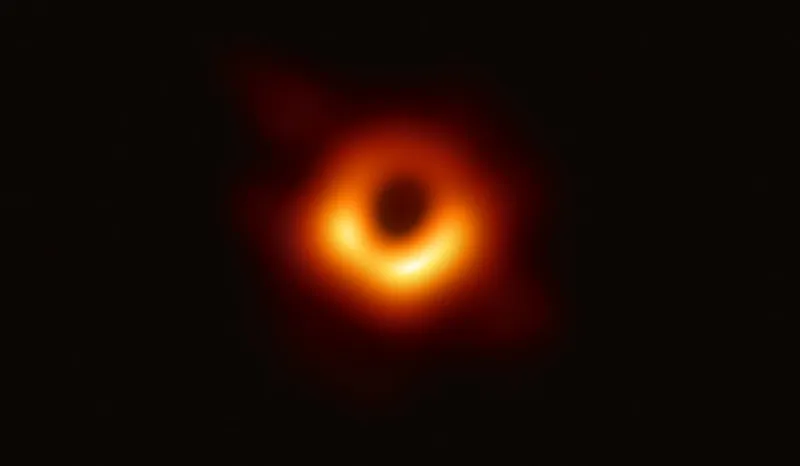
Here's the thing about a quasar: it's not a permanent fixture. It's a phase. A black hole can only shine while there's food on the table, and the supply of intergalactic gas has been drying up for billions of years. Galaxies matured, settled into quiet orbits, and stopped feeding their central monsters. Our own Milky Way's black hole, Sagittarius A*, has been on an extended fast for millions of years.
So the universe has been dimming — slowly, almost imperceptibly — since cosmic noon ended. Star formation peaked around the same time and has declined roughly tenfold since. The universe isn't dying, exactly. It's growing up, settling down, trading its wild youth for middle age.
Why This Is Actually Good News for Stargazers
It's tempting to read all this as a downer — the party's over, the lights are going out. But flip it around. A quiet universe is a visible universe.
Because quasar activity has calmed down, the light from ancient quasars — those brilliant beacons from ten billion years ago — reaches us now without being drowned out. When you point a backyard telescope at 3C 273, you're reading a letter mailed from cosmic noon itself, delivered on time because the modern universe isn't shouting over it. During the actual quasar era, studying individual quasars in detail would've been like trying to hear a violin solo in the middle of a stadium roar.
There's another advantage: clarity. The dimming universe means less chaotic background noise, fewer blinding sources, and cleaner signals. Much of what we know about cosmic origins — the cosmic web, the history of galaxy growth, the measurement of dark energy — depends on quasars as beacons shining through the fog. We can only do that science because we live in the twilight, where those beacons stand out.
The Far Future: A Universe With the Lights Off
So what happens eventually? Stretch the timeline far enough and the picture gets lonely. Star formation continues its long decline. New quasars become vanishingly rare as galaxies run out of gas. Tens of billions of years from now, the universe's great engines will mostly be dark — dormant black holes drifting in galaxies of aging red stars.
Quasars, the brightest things the universe ever built, will be extinct. Their light will still be traveling, though. Light doesn't quit. Somewhere, forever, photons from cosmic noon will still be crossing the void, carrying the story of the universe's wildest chapter to whatever's out there to receive it.
The Best Time to Be Watching
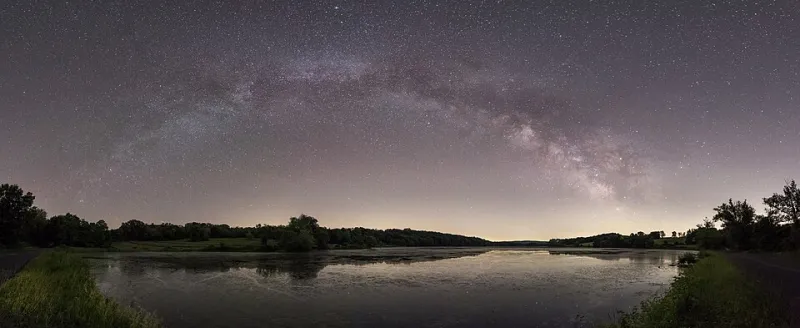
Here's the part that should make you feel lucky rather than wistful. We live in a cosmic sweet spot: late enough that the universe is calm and legible, early enough that it's still full of active wonders. Quasars still flare. Black holes still feed. The night sky over an American backyard — away from city lights, maybe out in West Texas or the Arizona desert — still holds galaxies, nebulae, and the occasional billion-year-old beacon.
The quasar age is ending, yes. But endings are only visible to those who stick around to watch. And we happen to have front-row seats, with better instruments than any generation before us, for a show that's still very much in progress.
The lights are dimming. That just means it's finally dark enough to see the stars — and everything behind them.