Popcorn Physics: Grading Hollywood's Black Holes From Interstellar to Sci-Fi Trainwrecks
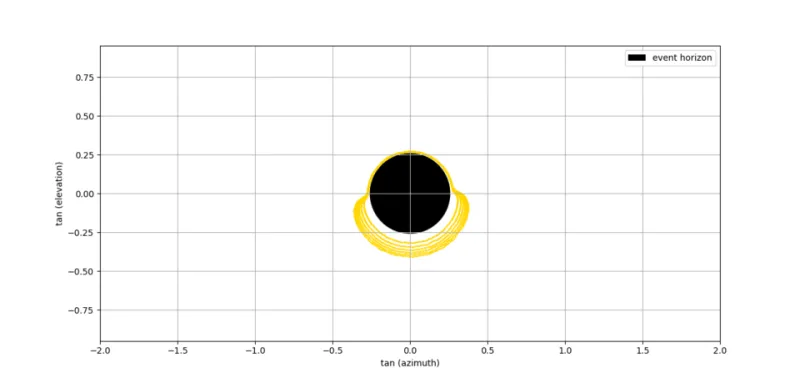
Photo: Cornelius Fyla, CC BY-SA 4.0, via Wikimedia Commons
Hollywood loves a black hole. It's the ultimate plot device: a cosmic garbage disposal that can swallow spaceships, bend time, or open a doorway to another dimension whenever the script needs a lifeline. But how often does Tinseltown actually get the science right?
Here at Quasarborn, we decided to grade the most famous black hole and quasar depictions in movies and TV — from the scientifically rigorous to the gloriously ridiculous. Consider this your field guide to separating the accretion disks from the artistic license.
The Gold Standard: Interstellar's Gargantua
Let's start with the obvious champ. Christopher Nolan's Interstellar (2014) didn't just feature a black hole — it hired theoretical physicist Kip Thorne, who later won a Nobel Prize for his work on gravitational waves, as an executive producer and scientific advisor.
The result, Gargantua, is still the most accurate black hole ever committed to film. The glowing ring of light you see? That's a real phenomenon called gravitational lensing, where the black hole's extreme gravity bends light from the disk behind it, wrapping it around so you can see both above and below the shadow at once. Thorne's team even published peer-reviewed physics papers based on the rendering equations they developed for the movie.
The famous time dilation scene, where hours on a planet's surface translate to decades back on the ship, is also rooted in real relativity. Orbit that close to a spinning supermassive black hole, and time genuinely crawls. Does the movie take some liberties? Sure — the disk of a real black hole that size would blast the nearby planet with lethal radiation. But the core physics? Legit.
Grade: A
The Honorable Mentions: Getting It Mostly Right
The 2020 film The Wandering Earth 2 and TV shows like The Expanse universe treat black holes and exotic physics with more caution than spectacle. Star Trek has a complicated record — the franchise has used singularities as plot devices for decades, but it occasionally nails concepts like event horizons and gravitational shear better than most blockbusters.
And Don't Look Up (2021), while technically about a comet, deserves a nod for capturing something real about how American audiences and media process existential cosmic threats: badly, and with a lot of cable news punditry.
Grade: B+
The Middle of the Class: Beautiful but Wrong
The Black Hole (1979), Disney's first PG-rated film, deserves credit for trying. It gave us a spaceship named the Event Horizon (yes, before the horror movie borrowed the name) and a swirling vortex that at least acknowledged black holes spin and pull. But the ending — where our heroes literally fly into the black hole and emerge somewhere resembling heaven and hell — is pure theology, not physics.
Then there's Star Wars. The Maw Installation and various black hole storylines in the expanded universe treat singularities like convenient highway hazards. Fun? Absolutely. Accurate? The Force is strong, but Einstein is stronger.
Grade: C
The Flunkies: Sci-Fi's Biggest Cosmic Crimes
Now for the fun part — the depictions that would make Kip Thorne weep.
The 1997 horror film Event Horizon turns a black hole drive into a portal to a hell dimension. In reality, crossing an event horizon doesn't take you anywhere spooky — it just means you can never come back. No demons, no dimension-hopping, just inescapable gravity and, eventually, spaghettification. (Yes, that's the real scientific term.)
Countless B-movies depict black holes as cosmic vacuum cleaners that suck everything in from across the galaxy. Wrong. If the sun were replaced by a black hole of equal mass tomorrow, Earth would keep orbiting exactly as it does now — just very cold and very dark. Black holes don't suck; they pull, and only at close range.
And don't get us started on movies where characters casually fly through a black hole unscathed. The tidal forces near a stellar-mass black hole would stretch any spacecraft into a noodle long before it got close.
Grade: F, with honors in entertainment
Why the Quasar Gets No Screen Time
Here's the twist that frustrates us quasar fans: Hollywood barely touches the brightest objects in the universe. A quasar — a supermassive black hole feeding on gas and dust so furiously that it outshines entire galaxies — is a thousand times more visually dramatic than a lone, dark black hole. Yet screenwriters keep reaching for the silent monster instead of the cosmic beacon.
Maybe it's because quasars are too far away to menace a spaceship. Or maybe Hollywood hasn't figured out the drama of an object 40 billion times the sun's luminosity. Either way, we're ready when they are.
The Verdict
The gap between Interstellar and Event Horizon shows how far science advising has come in Hollywood. When filmmakers invest in real physics, the result isn't just accurate — it's often more awe-inspiring than anything a screenwriter could invent. The universe, it turns out, writes better plots than we do.
So the next time a blockbuster features a black hole, watch the light around it. If it's lensed, glowing, and behaving itself, tip your hat to the physics consultants. If it's sucking up spaceships from three star systems away, just enjoy the ride — and maybe write an angry letter to the studio. We certainly will.
Got a favorite black hole movie moment we missed? Drop it in the comments — we're always hungry for more cosmic cinema crimes.