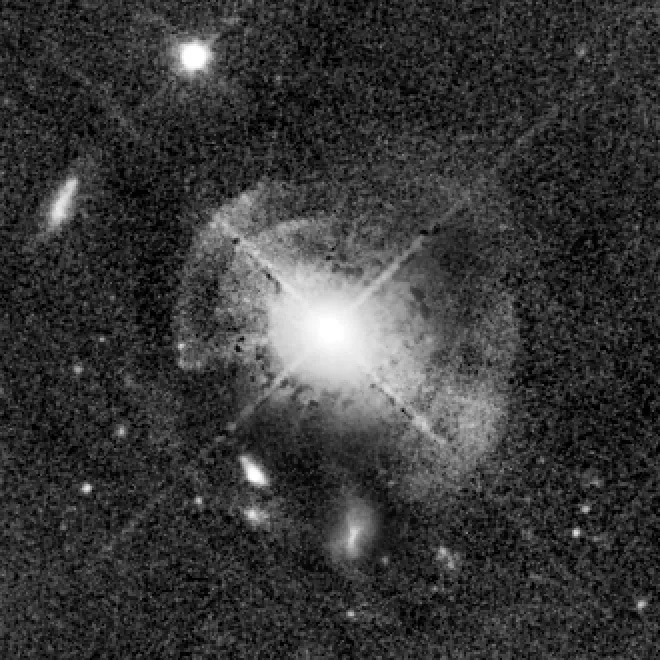
Road Trip to the Monster Hunters: American Observatories Chasing Quasars Right Now
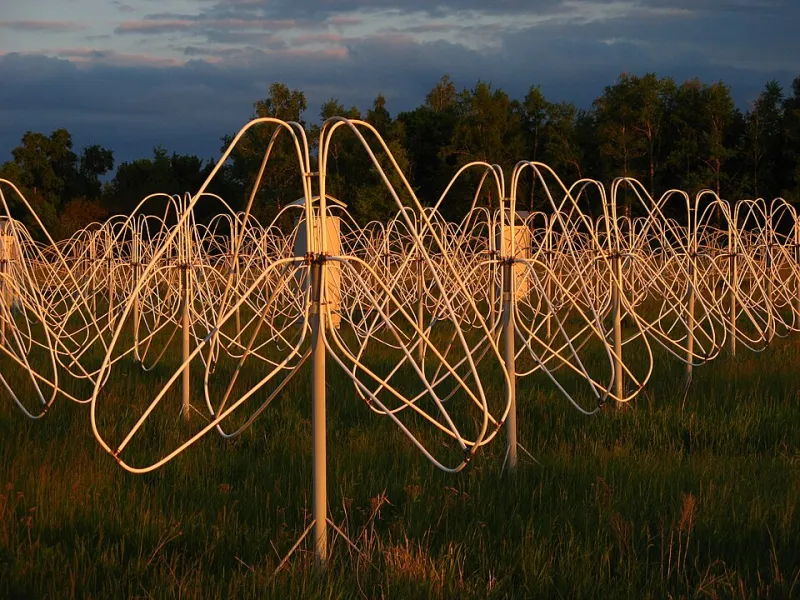
Photo: Serge Yerin (YeS), CC BY 4.0, via Wikimedia Commons
Quasars sound like the kind of thing you'd need to study from the far side of the planet. The brightest objects in the universe, billions of light-years away, feeding supermassive black holes — surely the action is all in space telescopes and exotic mountaintop labs, right?
Actually, a surprising amount of quasar science happens right here in the United States, and some of it is closer to your next road trip than you'd think.
Why Quasar Hunters Love the American Southwest
Quasars are faint points of light — after all that cosmic travel, their glow arrives at Earth looking pretty dim. That means quasar researchers need two things: dark skies and high, dry air. The American Southwest delivers both in spades.
Arizona's Kitt Peak National Observatory, about 90 minutes from Tucson, has been a workhorse for this kind of science for decades. Its telescopes have helped astronomers take spectra of quasars — essentially reading the light's fingerprint to figure out what the black hole is eating, how fast it's spinning, and how far away it sits. The visitor programs here are genuinely amateur-friendly; you can spend an evening learning how the pros actually work.
Then there's New Mexico's Very Large Array, the famous Y-shaped spread of radio dishes you might recognize from the movie Contact. Quasars aren't just visible-light objects — many blast out powerful radio jets, and the VLA has been imaging those jets since the 1980s. Their self-guided walking tour includes an open-air exhibit where you can stand next to a replica antenna the size of a house.
The Quiet Giants of California and Hawaii
California's Lick Observatory, perched on Mount Hamilton above San Jose, holds a special place in quasar history. In the 1960s and '70s, astronomers here helped establish just how bizarre these objects were — so distant that their light had left before Earth existed. Today it runs summer visitor nights where the historic 36-inch refractor is pointed at real targets.
And while Hawaii's Maunakea observatories aren't exactly a weekend drive for most Americans, they're worth mentioning because telescopes there — like Keck — routinely split quasar light apart to weigh the black holes powering them. If you're ever on the Big Island, the visitor station at 9,200 feet offers stargazing that will ruin ordinary night skies for you forever.
What Exactly Are They Looking For?
So what's the actual mission when an American observatory points at a quasar? A few big questions drive the work:
- How fast are monster black holes spinning? The faster the spin, the more we learn about how the black hole grew over cosmic time.
- What happens when quasars shut off? Some galaxies that once hosted blazing quasars now look dormant. Catching the transition is a holy grail.
- Can quasars act as cosmic signposts? Because they're so bright and so far away, quasars help astronomers map the structure of the universe itself.
None of these questions can be answered by a single telescope in a single night. They take years of follow-up — which is exactly why observatories keep coming back to the same faint dots of light.
You Can Actually Visit (Yes, Really)
Here's the part most people don't realize: many of these facilities actively welcome the public.
Kitt Peak runs guided night programs where you observe through research-grade telescopes. The VLA hosts an open house most years, letting visitors walk right up to the giant dishes. Lick Observatory's summer series brings in working astronomers to talk about their current research — sometimes quasar research, sometimes not, but always the real thing.
Even if you can't make the trip, projects like the Sloan Digital Sky Survey — which has cataloged hundreds of thousands of quasars — publish their data freely. Plenty of citizen scientists have discovered new quasars from their kitchen tables.
The Takeaway
Quasar science can feel impossibly remote — objects billions of light-years away, physics that bends time. But the people doing that work are real, and a lot of them are working in deserts and on mountaintops across the American West. There's something genuinely moving about standing where that happens: the same sky above you that carries light older than the solar system, and someone nearby making sense of it.
So the next time you're planning a trip through Arizona, New Mexico, or California, consider a detour. The monster hunters are closer than you think.