You Can Help Discover a Quasar This Weekend: A Backyard Guide to Real Cosmic Research
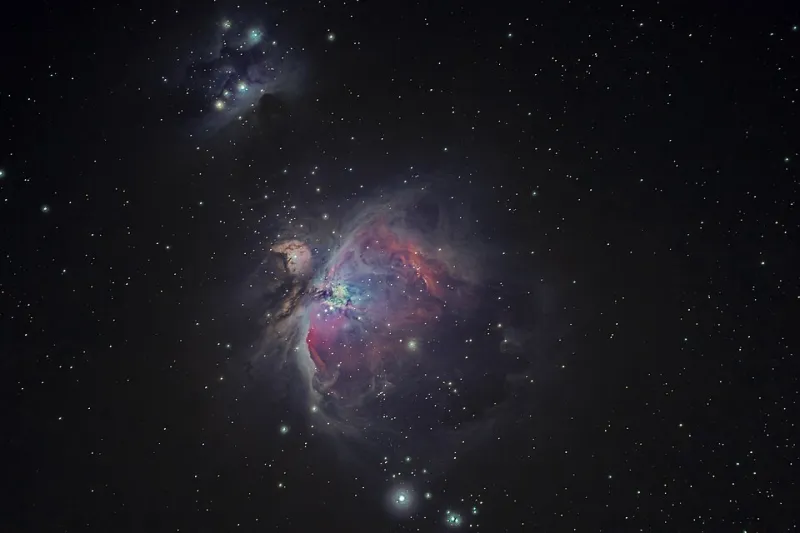
Photo: BryanGoff, CC BY-SA 4.0, via Wikimedia Commons
Quick question: when was the last time you did something with the night sky instead of just looking at it?
If the answer is "never," good news—you're exactly who this article is for. Quasar and black hole research isn't a game reserved for folks with PhDs and time on the Keck telescopes. Right now, thousands of amateur astronomers in the United States are classifying real telescope data, monitoring flickering blazars from their driveways, and getting credited in scientific papers. Some of them started with nothing more than a laptop and a free evening.
Here's how to join them.
Start Tonight with Zero Equipment: Zooniverse
The fastest on-ramp is Zooniverse, the world's largest platform for people-powered research. Projects like Black Hole Hunters ask volunteers to scan telescope images for the telltale brightening of a star when a black hole passes in front of it—a phenomenon called gravitational microlensing. No math required. You're literally looking at pictures and clicking when something looks bright.
Other projects have included classifying galaxy mergers and spotting oddities in survey data. The beauty is that machine learning still needs human eyes for the weird stuff, and scientists have published papers listing volunteer contributors. Your username can end up in the acknowledgments of a real study. Try getting that from a Netflix binge.
Your first night, step by step:
- Create a free Zooniverse account (five minutes).
- Search for black hole or galaxy classification projects.
- Complete the short tutorial—it walks you through example images.
- Classify 10 objects. That's it. You're officially a citizen scientist.
Level Up: Monitor Variable Quasars from Your Driveway
Ready for the real thing? Quasars and blazars aren't steady beacons—they flicker, flare, and dim on timescales from hours to years. Tracking that variability is genuinely useful science, and professional observatories can't watch everything at once. That's where amateurs shine.
The American Association of Variable Star Observers (AAVSO) is the gold standard here. This Cambridge, Massachusetts-based organization has coordinated amateur observations for over a century, and its data gets used in actual research on blazars like the famous OJ 287 and BL Lacertae. Members use a technique called photometry—precisely measuring a target's brightness compared to nearby reference stars.
Gear recommendations by budget:
- Starter (~$0–500): Binoculars (10x50 is the classic) for bright variable stars, plus practice estimating brightness visually. Old-school, but it works and AAVSO accepts visual estimates.
- Serious (~$1,500–3,500): A used 8-inch SCT or a fast Newtonian, a monochrome or one-shot-color astronomy camera, and a V-filter. This setup can do legitimate photometry of blazars at magnitude 14–15.
- Dedicated (~$5,000+): A 10–11-inch scope on a solid equatorial mount, cooled camera, and autoguiding. Congratulations—you're operating a small research station.
The AAVSO website offers free manuals and a mentoring community, and there are active astronomy clubs in essentially every U.S. metro area. (Pro tip: club members love showing off their gear. Ask, and you'll get hands-on time with equipment before spending a dime.)
Real People, Real Discoveries
Amateur contributions to this field aren't hypothetical. Backyard observers have caught blazar flares that professional telescopes then chased with X-ray and gamma-ray instruments—multi-messenger campaigns that depend on the ground-based eyes of hobbyists to know when to look. Supernova hunters like the late Tim Puckett's network and countless independent observers have discovered hundreds of exploding stars, many of which turned out to be beacons in the very galaxies whose black holes researchers want to study.
And every classified image on Zooniverse feeds algorithms and follow-up targets. When the next big quasar survey drops millions of images, the sorting starts with people exactly like you.
A Realistic First Season
Here's a no-pressure roadmap:
- Week 1: Zooniverse account, 50 classifications, join an astronomy forum or local club.
- Month 1: Pick one variable blazar from AAVSO's target list and learn its field with binoculars or a small scope.
- Month 3: If you've got a camera, submit your first photometry measurements. Yes, your name goes into the database.
- Year 1: Consider the AAVSO's free online courses. You'll be measuring things most people don't know exist.
Why It Matters
There's a quiet thrill in knowing that a brightness measurement you took from your backyard in Ohio or Arizona slotting into a data pipeline that ends in a scientific paper. The universe's most violent objects—black holes swallowing matter, jets aimed at Earth like flashlights—are being monitored, in part, by people who did it after dinner on a Tuesday.
The sky doesn't care about your credentials. It just needs eyes. Point yours somewhere useful this weekend.