Thirteen Billion Years Up a Mountain: Chasing Ancient Quasar Light on Mauna Kea
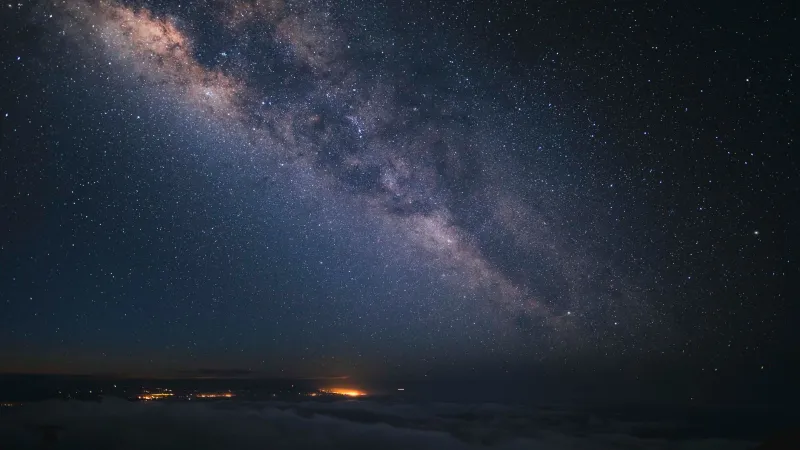
There's a spot on the Big Island of Hawaii where you can drive from a beach to the edge of the universe in about two hours. Start at sea level in Hilo, grab a malasada, and head up Saddle Road. By the time you've climbed 13,800 feet, you'll be standing above 40% of Earth's atmosphere, surrounded by some of the most advanced telescopes ever built — instruments that spend their nights staring at quasars so distant their light left before our galaxy finished forming.
Mauna Kea isn't just a mountain. It's arguably the single best place on American soil to study the early universe, and it earned that title through a strange combination of geography, isolation, and very good luck.
Why a Volcano Beats Everything Else
Quasar hunting is brutally simple in principle: you need to collect as many faint photons as possible, and you need to keep Earth's atmosphere from messing with them along the way. Most of the planet fails that test.
Mauna Kea passes it spectacularly. The summit sits above the inversion layer — the cloud deck that traps humidity and haze near sea level — so the air up top is bone-dry and remarkably still. Fewer than 300 nights a year are lost to weather. There are no major cities upwind to flood the sky with light pollution, and the surrounding Pacific is so empty that aircraft interference is nearly nonexistent.
Then there's the latitude. At about 20 degrees north, Mauna Kea can see both the northern and southern skies — roughly 90% of everything visible from Earth's surface over the course of a year. For astronomers tracking quasars flagged by surveys in the southern hemisphere, that's a huge deal.
The result? Telescopes like the twin 10-meter Keck instruments and the 8.2-meter Subaru have been responsible for confirming some of the most distant quasars ever found — beacons shining from black holes that switched on when the universe was barely 700 million years old.
Reading a Quasar's Ancient Mail
Here's what those telescopes are actually doing up there. A quasar is the blazing core of a young galaxy, powered by a supermassive black hole devouring surrounding gas. Because quasars are so absurdly bright, they're visible across nearly the entire observable universe — and because light travels at a fixed speed, looking at them is looking back in time.
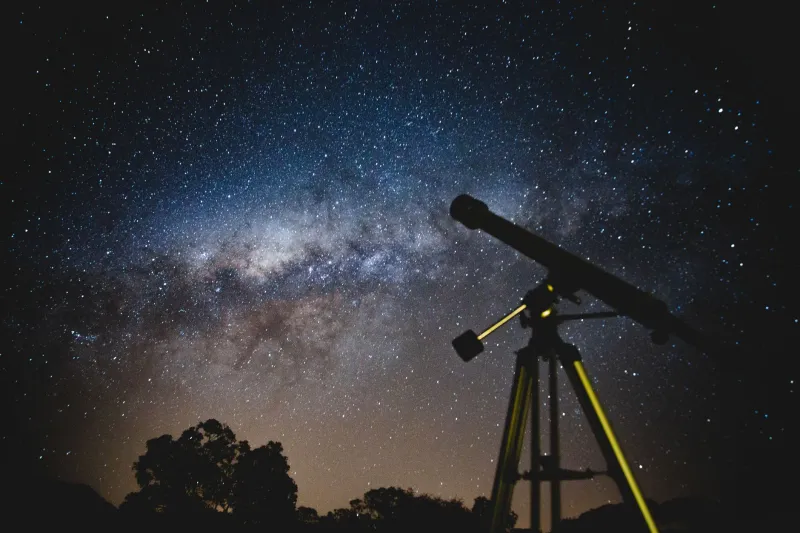
The most distant quasars studied from Mauna Kea are so far away that their light has been stretched by cosmic expansion into the infrared. That's a problem for most telescopes, but it's exactly where Mauna Kea's high, dry summit shines. Keck's instruments, like MOSFIRE and NIRES, were built to catch that stretched-out light and split it into spectra — a barcode of chemical fingerprints that tells scientists what the early universe was made of.
One of the landmark finds, a quasar designated UHS J043947.08+163415.7, was confirmed in part using data that relied on Mauna Kea's unique conditions. Its light took over 12 billion years to arrive. When you're standing on that summit at dusk, you're essentially standing next to a mailbox full of letters mailed before the Sun existed.
Visiting Without Wrecking the Science
You can't just roll up to the summit in a rental at midnight with your headlights blazing — and you shouldn't. The mountain is a sacred site in Native Hawaiian culture, and the observatories take light pollution seriously. A few practical pointers:
- Acclimate first. The Visitor Information Station at 9,200 feet is your friend. Most rental agreements prohibit driving above it, and the summit's thin air (about 40% less oxygen than sea level) is genuinely risky if you sprint up from the beach. Hang out at the VIS for at least 30 minutes.
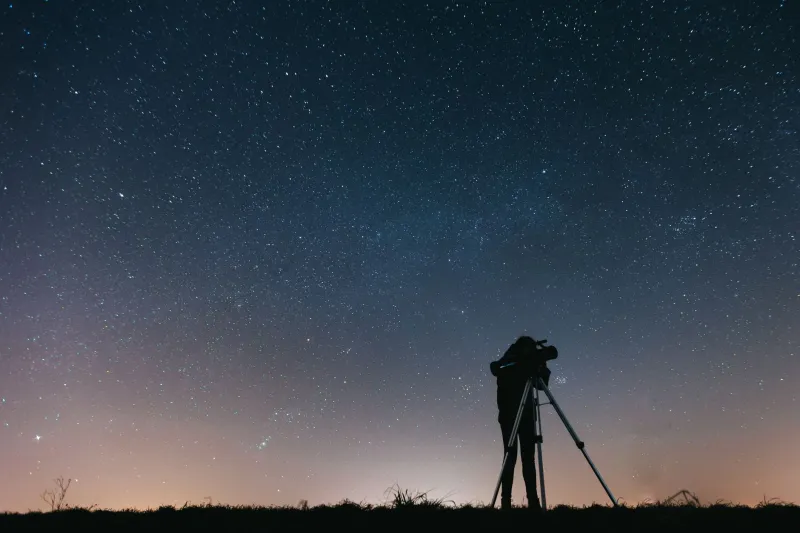
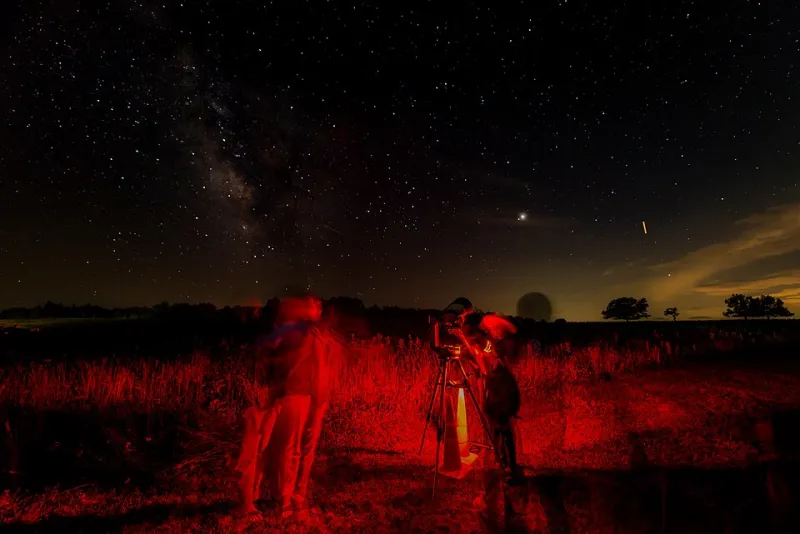
- Save the stargazing for the VIS. Nighttime summit access is restricted to astronomers, but the Visitor Information Station runs free public stargazing programs with serious telescopes most nights. You'll still be above the clouds, and the Milky Way from up there is flat-out unreal.
- Dress like it's winter. It's Hawaii, but it's also below freezing at the summit much of the year, with snow in winter. Bring real layers.
- Mind the 4WD rule. If you book a summit tour with a licensed operator, they'll handle the drive and the altitude logistics for you.
The Mountain's Future Is Being Written Now
Mauna Kea astronomy is at a crossroads. The Thirty Meter Telescope, which would be the most powerful telescope in the northern hemisphere, remains stalled by legal and cultural disputes — and the broader conversation about who gets to decide what happens on the mountain has reshaped how the observatories operate. The current master plan calls for decommissioning several older telescopes by the 2030s to reduce the summit's footprint.
Whatever happens next, the mountain's legacy is already secure. Nearly every major discovery about the first billion years of the universe — including the census of early quasars that tells us how fast supermassive black holes grew — has a Mauna Kea chapter in it.
So if you ever find yourself on the Big Island with a free evening, skip one beach day. Drive up as the sun sets, watch the cloud deck turn into a sea of white below you, and look up. Some of that light hitting your retina left home before the Milky Way had spiral arms. Not a bad view for a Tuesday night.